Network Infrastructure
Core Infrastructure Disciplines
- Structured Cabling
- Rack & Equipment Deployment
- Fiber & Coax Service
- Wireless Connectivity
- Retail Systems
- Temporary Deployments
- Outside Plant & Last-Mile Troubleshooting
What This Service Solves
Network instability is often rooted in the physical layer. Poor termination, unlabeled patching, unsupported hardware, and disorganized cabling create service problems that waste time and complicate every future visit.
Switching, Patching, and Rack Presentation
Commercial infrastructure has to be more than operational. It has to be understandable. Clean switch deployment, labeled copper presentation, and orderly patching reduce troubleshooting time and make future service work faster and less disruptive.
This kind of install quality matters in live business environments where every unlabeled port and every sloppy patch path turns routine maintenance into unnecessary downtime.
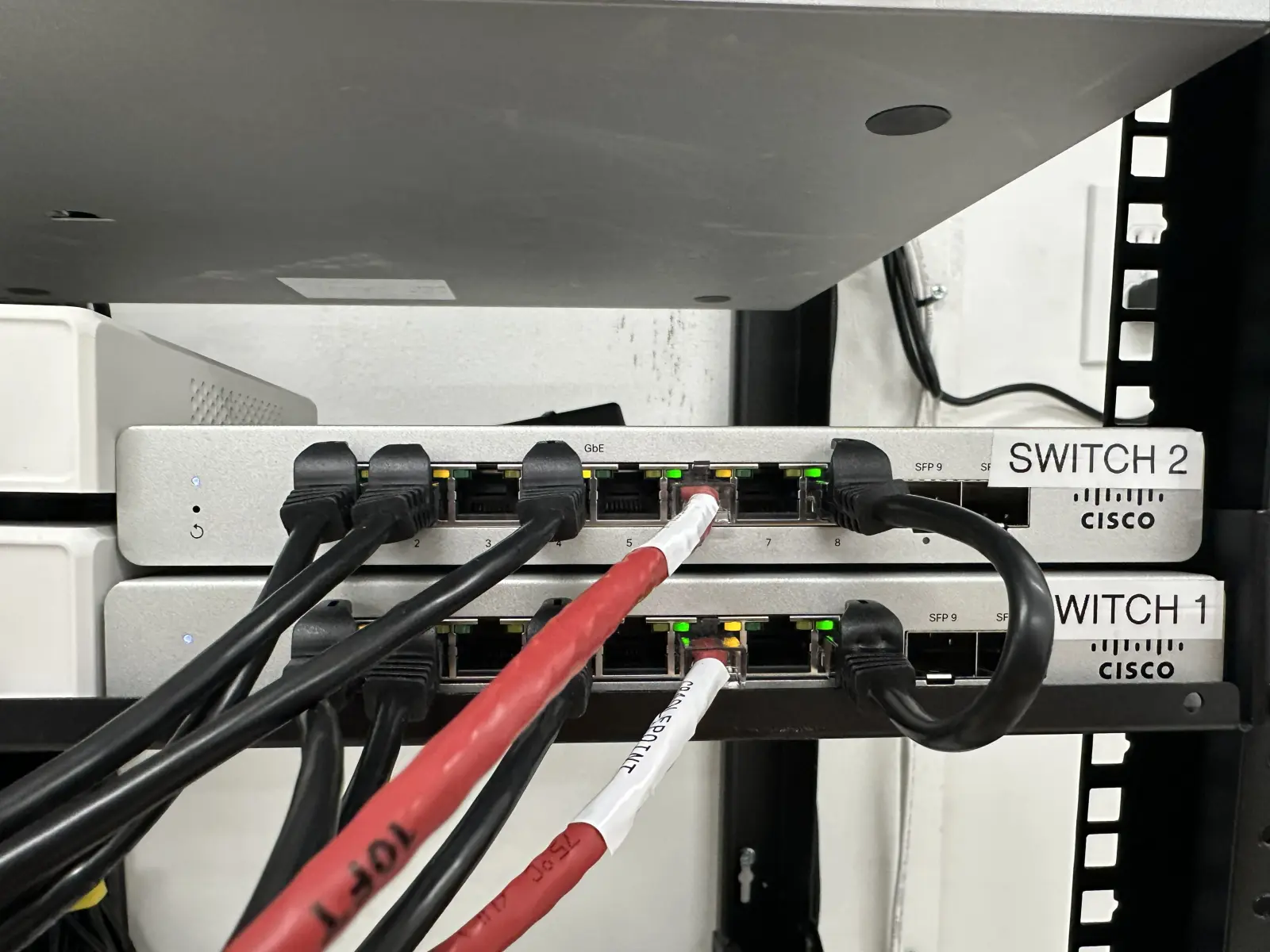
What Proper Execution Requires
- Clean routing and support of copper infrastructure
- Correct termination and port identification
- Organized patching and serviceable rack presentation
- Accurate deployment of switches and access points
- Structured documentation before sign-off
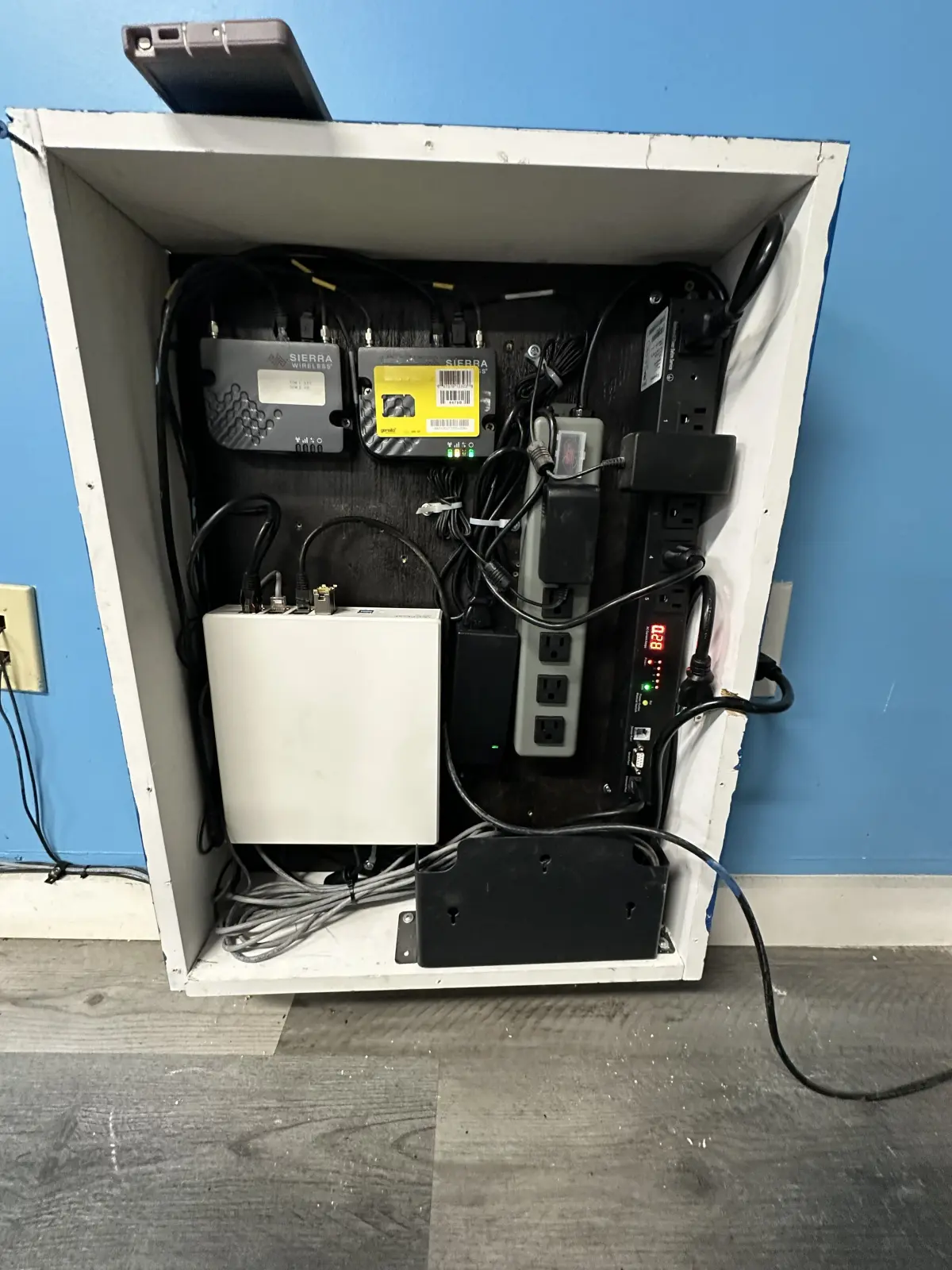
Failover and Edge Connectivity Support
Network infrastructure is not limited to copper and switches. Many commercial sites also depend on cellular backup, edge devices, and small cabinet builds that need clean mounting, stable power, and practical cable management.
This example shows a compact failover and support cabinet where organization, mounting discipline, and hardware access all matter. A functional network edge should be supportable, not improvised.
Redundant Edge Equipment and Service Continuity
In some environments, continuity depends on redundant edge hardware and correctly staged uplink paths. That means the physical install has to support the logical design instead of undermining it with poor cable routing, weak labeling, or cramped access.
The goal is clean deployment that supports troubleshooting, replacement, and client confidence. Good infrastructure work should make the environment easier to understand after the install, not harder.
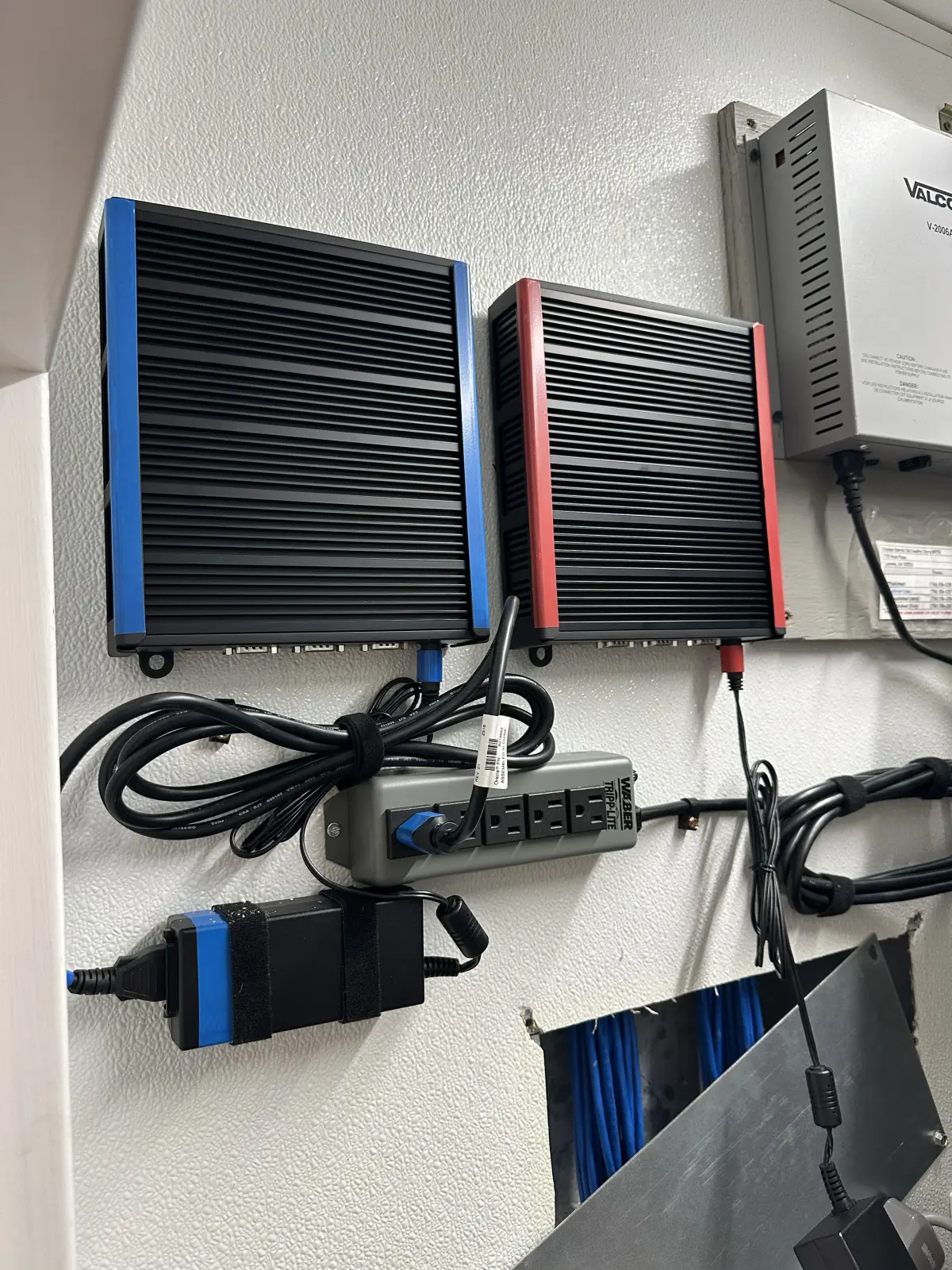
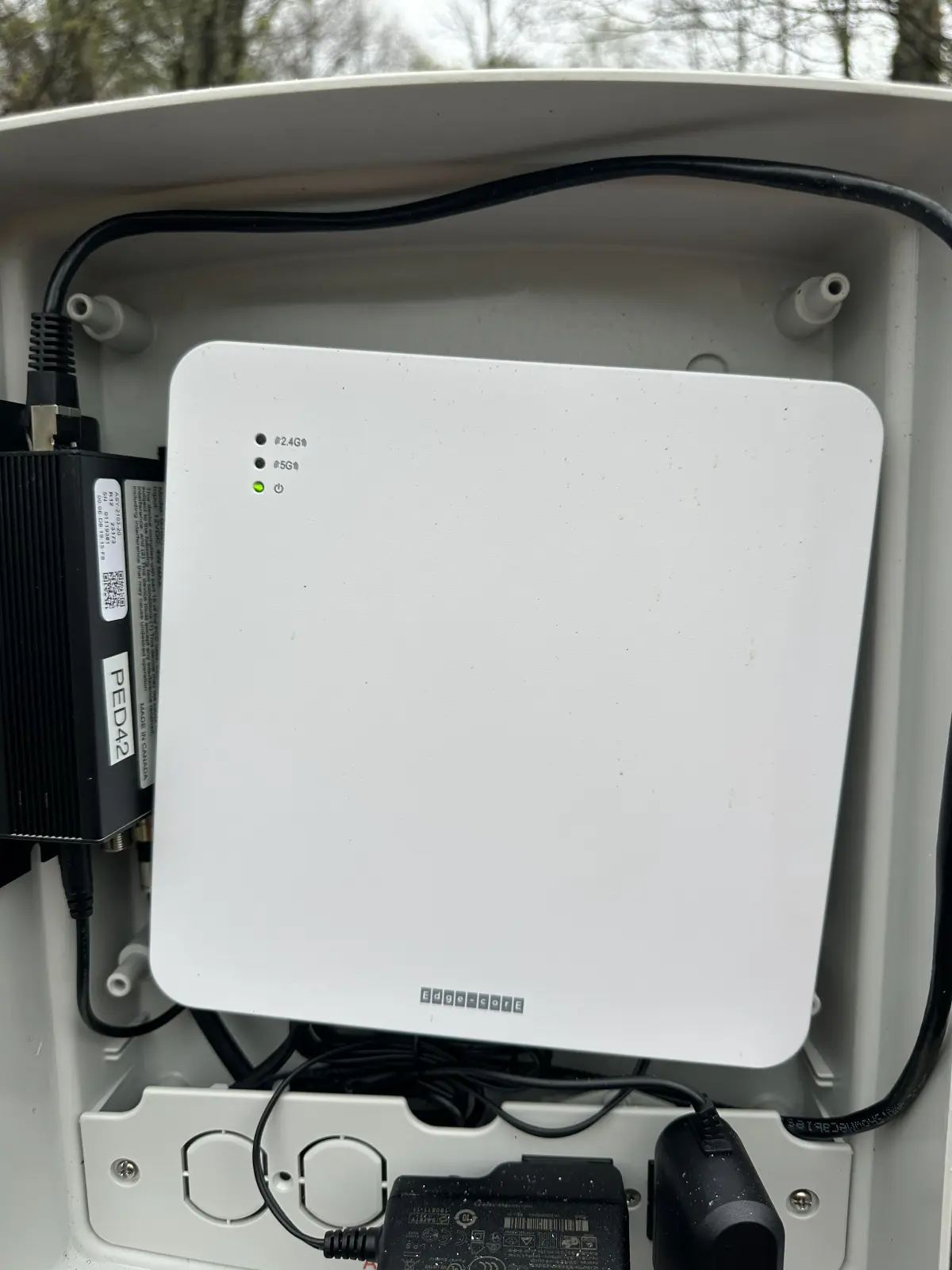
Outdoor Enclosures and Field Troubleshooting
Some infrastructure problems live outside the conditioned space. Outdoor network enclosures, modem/router support hardware, and edge connections require a technician who can work cleanly in less forgiving conditions while still keeping the install organized.
This kind of field work often sits at the intersection of connectivity, power, enclosure layout, and physical troubleshooting. It is still infrastructure work, just with more weather and less mercy.
Dearman Tech Execution Standard
Infrastructure is installed and left in a serviceable condition. That means better cable discipline, better labeling, better hardware handling, and a cleaner result for the client and the next technician who touches the environment.
Related Proof
Before-and-after infrastructure cleanup examples are available on the proof page.