Temporary Deployments
What This Service Solves
Temporary environments fail when setup is improvised. Poor cable handling, inconsistent device staging, rushed room layout, and weak teardown control create avoidable problems during active events. Short-term work still requires professional structure if the room is expected to function cleanly from open to close.
Structured Classroom Deployment
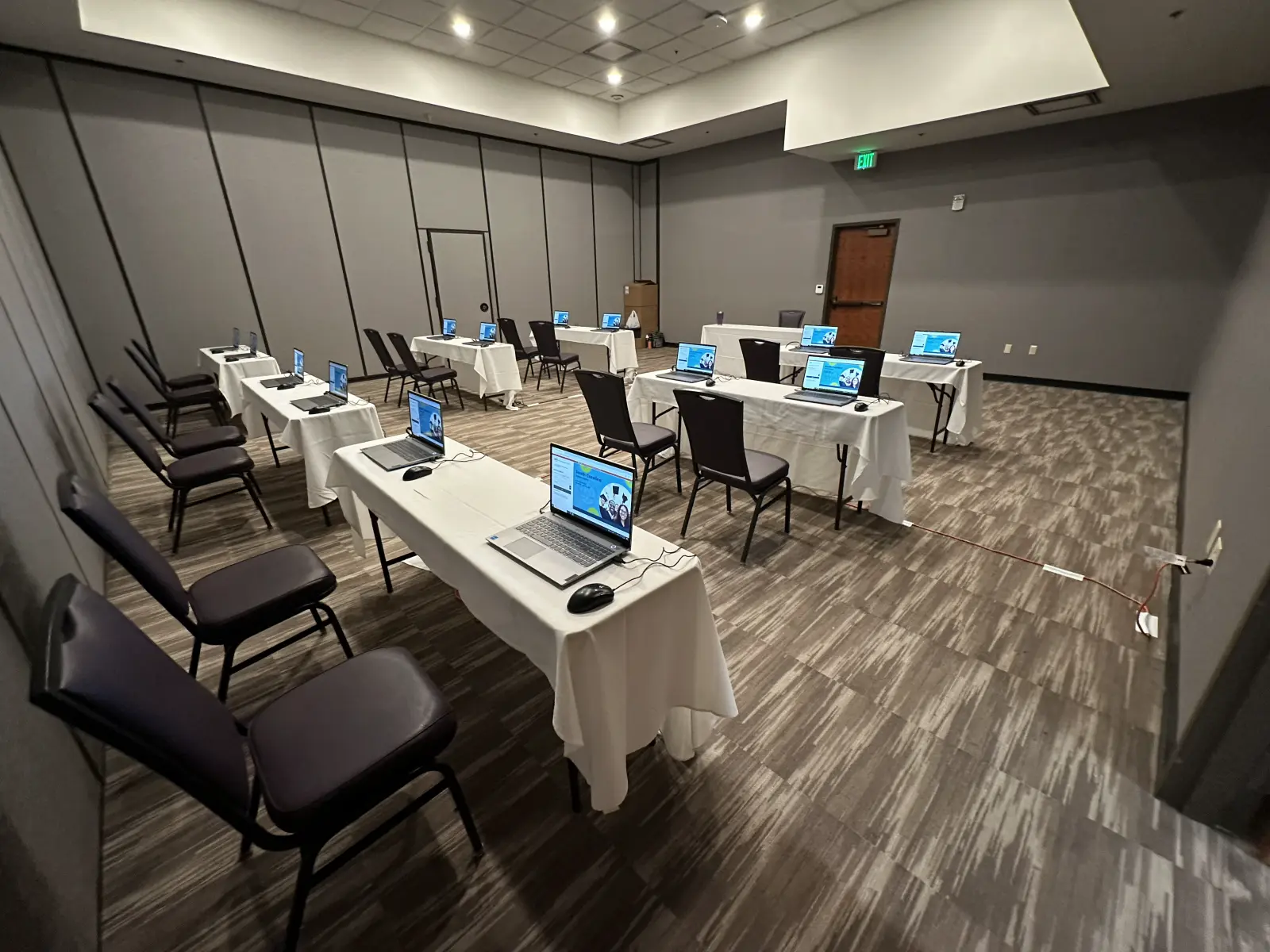
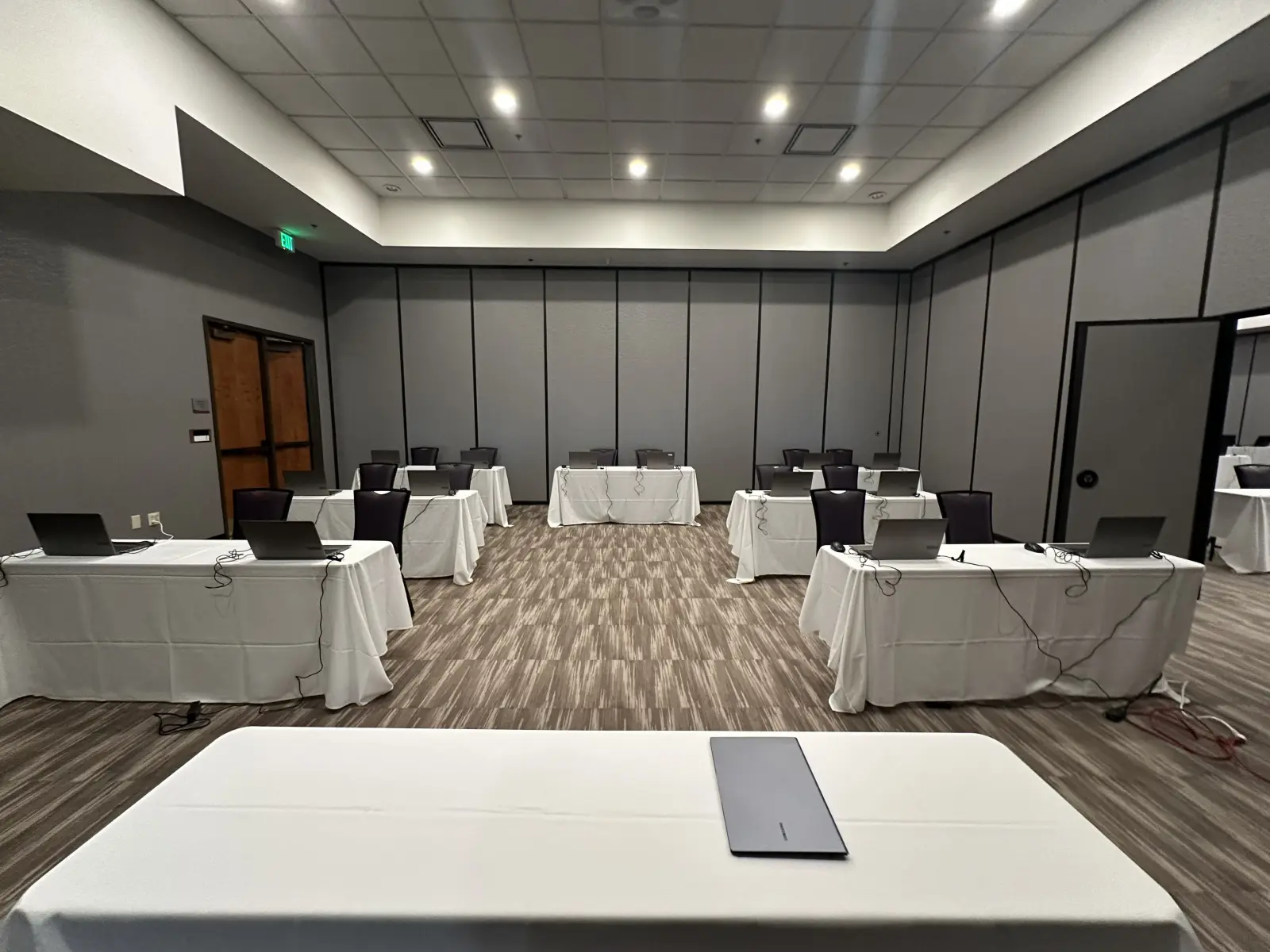
Temporary classroom environments often require dozens of workstations to be staged, powered, and tested inside a narrow setup window. Layout, cable routing, and station spacing have to support both reliability and usability during the event.
A clean deployment reduces troubleshooting during testing sessions and lets instructors or administrators focus on the event rather than the infrastructure supporting it.
Large-Room Testing Environments
Many deployments take place in conference centers or hotel meeting spaces where infrastructure must be temporarily introduced. Power distribution, station placement, and device preparation all have to be completed quickly without creating disorder in the venue.
Good setup work means every station is ready when participants arrive, not still being corrected after the room is active.
High-Volume Device Staging
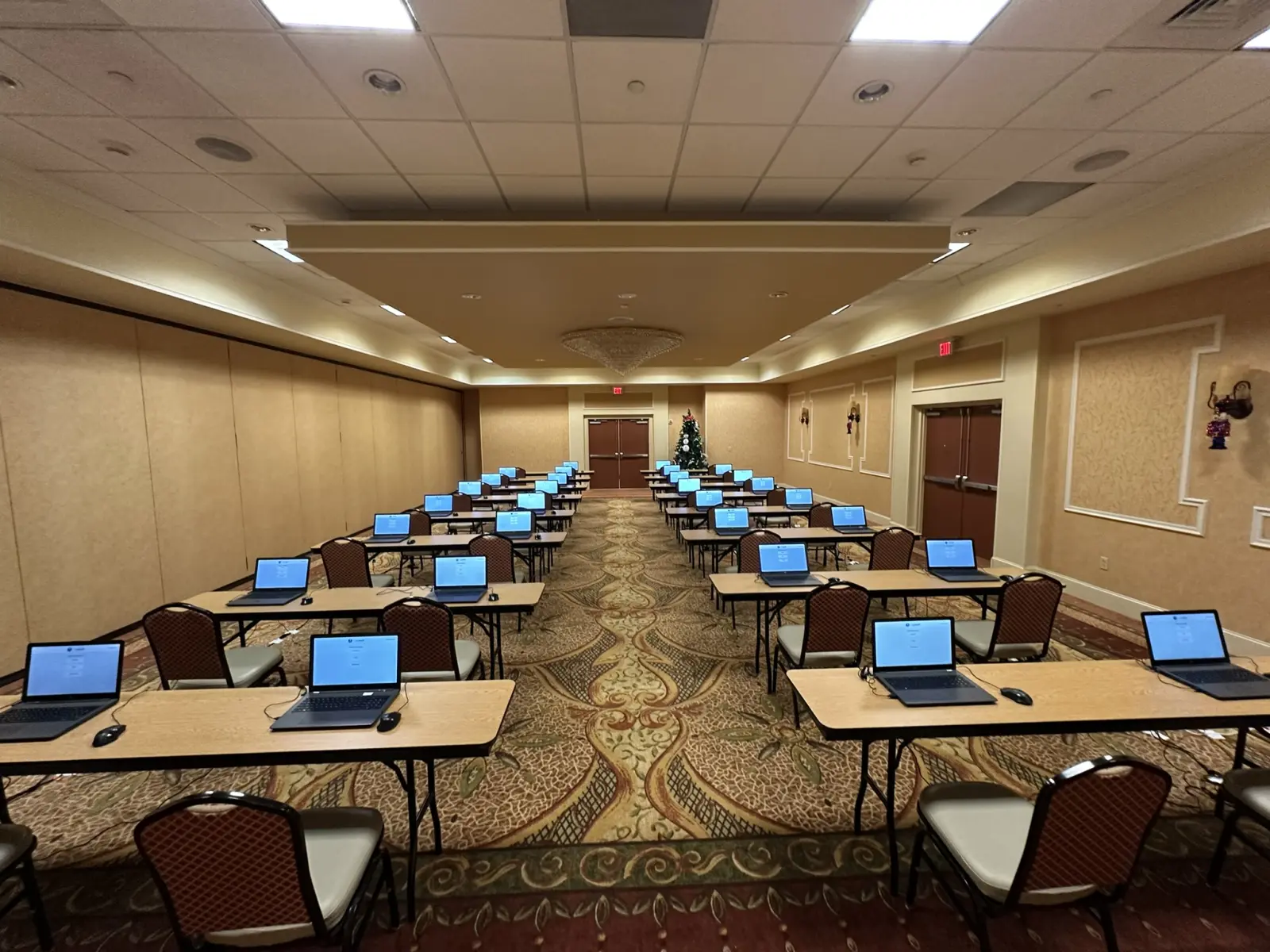
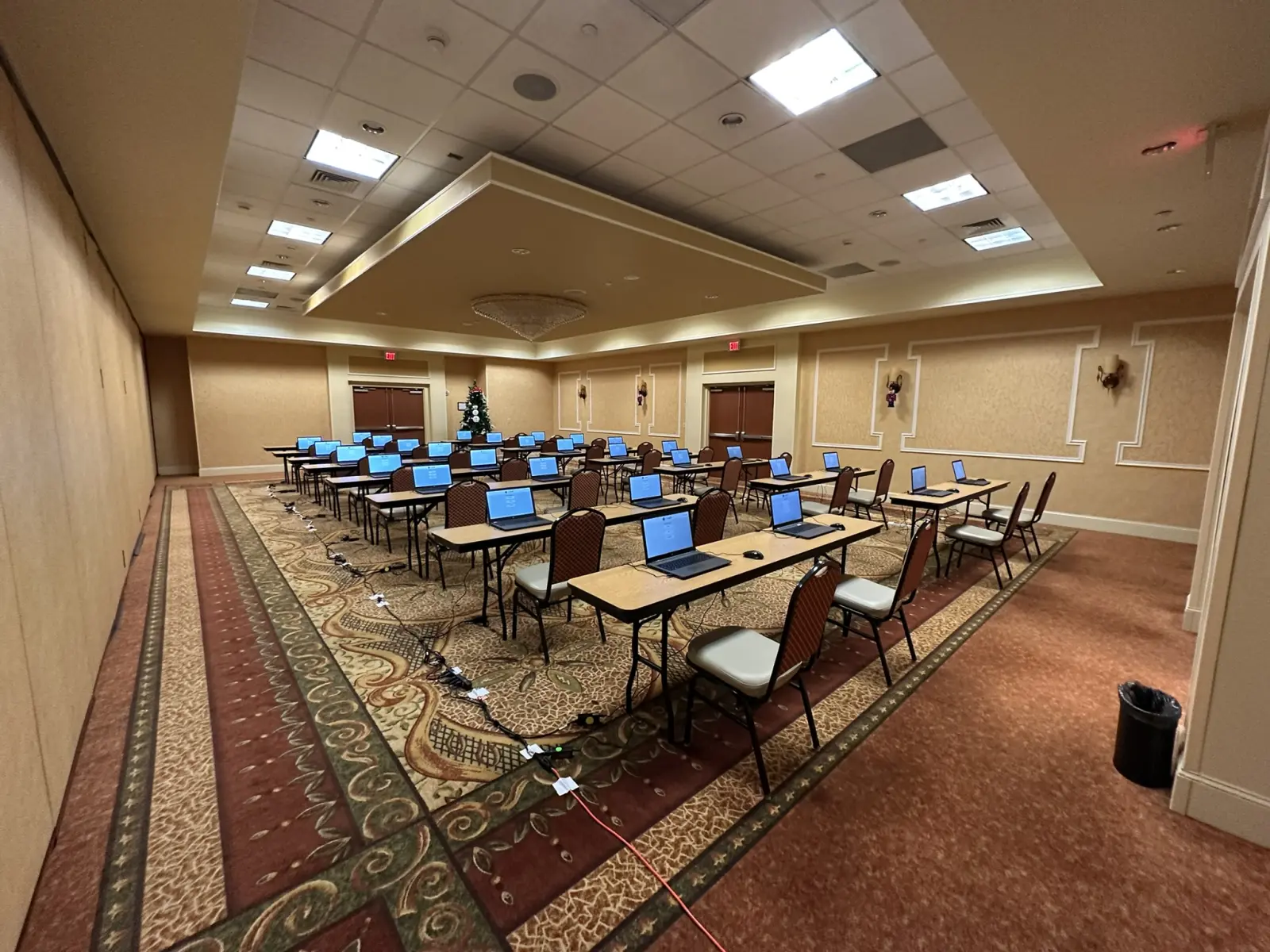
Deployments involving dozens of systems require organized staging procedures. Device preparation, login validation, peripheral testing, and workstation readiness all happen before the event begins.
The target is simple: when the room opens, every system should already be working.
Rapid Setup and Controlled Teardown
Temporary infrastructure must also disappear cleanly. Equipment, cables, and staging materials need to be removed quickly without leaving behind disorder or misplaced hardware.
Controlled teardown protects both the client equipment inventory and the venue hosting the event.
What Proper Execution Requires
- Repeatable setup workflow
- Consistent device staging procedures
- Organized power and cable routing
- Rapid troubleshooting capability
- Controlled teardown and inventory management
Dearman Tech Execution Standard
Temporary deployments are handled with the same discipline as permanent infrastructure work. The standard is stable operation during the event, controlled staging from the start, and a clean environment once the deployment is complete.
Related Proof
Additional examples of structured infrastructure work and deployment cleanup are available on the before-and-after page.